Career success in today’s competitive world depends on more than academic qualifications. While education provides a strong foundation, developing practical career skills helps individuals adapt, perform better, and grow professionally. Career skills include technical abilities, communication skills, problem-solving capabilities, leadership qualities, and the ability to learn continuously.
Professional growth is a gradual process that requires consistent improvement, experience, and a willingness to adapt to changing workplace demands. As industries continue to evolve because of technology and global competition, employees need to regularly upgrade their skills to remain valuable and achieve long-term career success.
Understanding how career skills are developed helps individuals create better learning strategies and prepare for future opportunities.
Understanding Career Skills and Their Importance
Career skills are abilities that help individuals perform effectively in professional environments. These skills allow employees to complete tasks, communicate with others, solve problems, and contribute to organizational goals.
Career skills can be divided into two main categories: technical skills and soft skills. Technical skills are related to specific knowledge required for a profession, such as software knowledge, data analysis, programming, marketing techniques, or industry-specific expertise.
Soft skills focus on personal abilities such as communication, teamwork, adaptability, time management, and leadership.
Both types of skills are important because modern workplaces require employees who can combine professional knowledge with strong interpersonal abilities.
Building Skills Through Education and Learning
Education is one of the first steps in developing career skills. Academic programs provide essential knowledge and introduce students to concepts related to their chosen fields.
However, professional growth requires continuous learning beyond traditional education. Online courses, workshops, certifications, training programs, and self-study help individuals expand their knowledge.
Learning new concepts regularly allows professionals to stay updated with industry changes and improve their expertise.
Successful professionals understand that learning is not limited to classrooms. Continuous education throughout a career helps individuals remain competitive and prepared for new opportunities.
Developing Skills Through Practical Experience
Experience plays an important role in career skill development. Practical application allows individuals to understand how knowledge works in real situations.
Internships, projects, part-time work, and professional assignments provide opportunities to develop confidence and improve abilities.
For example, a person may learn communication theories through education, but workplace interactions help develop real communication skills.
Practical experience teaches individuals how to handle challenges, make decisions, manage responsibilities, and work effectively with others.
Every professional experience contributes to skill improvement and career growth.
The Role of Continuous Learning in Professional Growth
The modern workplace changes quickly due to technological advancements and evolving business needs. Skills that are valuable today may require improvement or updating in the future.
Continuous learning helps professionals adapt to these changes.
Individuals can develop new skills by reading industry information, attending training sessions, exploring new technologies, and learning from experts.
A growth mindset encourages people to view challenges as opportunities to improve.
Professionals who continue learning are more likely to discover new career opportunities and achieve long-term success.
Improving Communication Skills
Communication is one of the most important career skills in almost every profession.
Strong communication helps individuals share ideas clearly, collaborate with teams, build professional relationships, and handle workplace discussions effectively.
Communication skills include speaking clearly, writing professionally, listening actively, and understanding different perspectives.
These skills can be improved through regular practice, presentations, discussions, and feedback from others.
Employees with strong communication abilities often become better team members and have greater opportunities for leadership roles.
Developing Problem-Solving and Decision-Making Skills
Problem-solving skills help professionals handle challenges and find effective solutions.
Workplaces often require employees to analyze situations, identify problems, and make informed decisions.
These skills develop through experience, critical thinking, and exposure to different situations.
Professionals can improve problem-solving abilities by studying real-world examples, practicing decision-making exercises, and learning from past experiences.
Strong problem-solving skills help individuals become more reliable and valuable in their roles.
Building Leadership and Teamwork Skills
Leadership skills are important for career advancement, even for individuals who are not in management positions.
Good leaders can motivate others, manage responsibilities, communicate effectively, and make confident decisions.
Teamwork skills are equally important because most workplaces require collaboration among employees with different skills and backgrounds.
Individuals can develop leadership and teamwork abilities by participating in group projects, taking responsibility, supporting colleagues, and learning from experienced professionals.
These skills help create positive workplace relationships and improve professional performance.
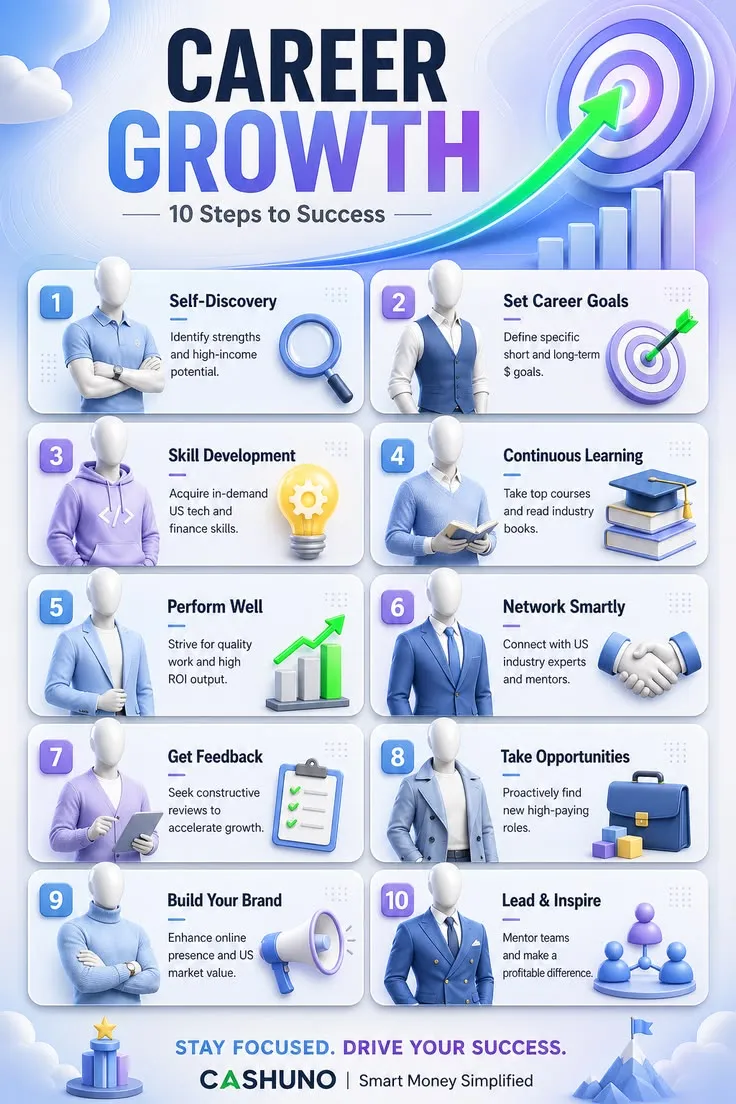
Learning Through Feedback and Self-Improvement
Feedback is an important tool for developing career skills.
Constructive feedback helps individuals understand their strengths and identify areas that need improvement.
Professionals who accept feedback positively can make better decisions about their personal and professional development.
Self-assessment is also important because it allows individuals to evaluate their progress and set improvement goals.
Regular reflection helps professionals recognize achievements, overcome weaknesses, and continue growing.
Developing Digital and Technology Skills
Technology has become an essential part of modern careers. Digital skills are required in almost every industry, regardless of profession.
Professionals need to understand relevant tools, software, and digital platforms that support their work.
Learning technology skills improves efficiency and helps individuals adapt to changing workplace environments.
As automation and artificial intelligence continue to influence industries, developing digital knowledge has become increasingly important for career growth.
Importance of Networking for Career Development
Professional networking helps individuals learn from others, discover opportunities, and build valuable relationships.
Connecting with industry professionals, attending events, participating in professional communities, and sharing knowledge can support career development.
Networking allows individuals to gain insights into industry trends and learn from experienced professionals.
Strong professional relationships can provide guidance, mentorship, and new career opportunities.
Developing Adaptability and Flexibility
Adaptability is one of the most valuable skills in a changing professional environment.
Industries, technologies, and workplace expectations continue to evolve, requiring individuals to adjust quickly.
Adaptable professionals are willing to learn new methods, accept changes, and explore new approaches.
Developing flexibility helps employees manage uncertainty and remain effective in different situations.
Organizations value employees who can handle change and continue performing successfully.
Setting Career Goals for Skill Development
Clear career goals help individuals decide which skills they need to develop.
Without goals, skill development may become unfocused and less effective.
Professionals should identify their career interests, understand industry requirements, and create a learning plan.
Breaking long-term goals into smaller steps makes improvement easier to track.
Goal-based development provides direction and motivation for continuous growth.
Overcoming Challenges in Skill Development
Developing career skills requires time, effort, and consistency. Many individuals face challenges such as lack of confidence, limited resources, or difficulty managing learning with other responsibilities.
Overcoming these challenges requires patience and dedication.
Starting with small improvements, maintaining a regular learning routine, and seeking support from mentors can make skill development easier.
Professional growth is a continuous journey rather than a one-time achievement.
Frequently Asked Questions (FAQs)
Why are career skills important for professional growth?
Career skills help individuals perform better, adapt to workplace changes, and create more career opportunities.
How can professionals improve their skills?
Professionals can improve skills through education, practical experience, training programs, feedback, and continuous learning.
Which skills are most important for career success?
Communication, adaptability, problem-solving, teamwork, digital knowledge, and technical expertise are important skills for modern careers.
Conclusion
Career skills are developed through continuous learning, practical experience, self-improvement, and adaptation to changing professional environments. Successful professionals understand that growth requires regular effort and a commitment to improving their abilities.
By developing technical knowledge, communication skills, leadership qualities, and problem-solving abilities, individuals can create stronger career opportunities.
Professional growth is not achieved overnight. It is a continuous process of learning, practicing, and improving. Those who invest in skill development are better prepared to handle workplace challenges and achieve long-term career success.