Learning is a continuous process that helps students develop knowledge, improve skills, and achieve academic success. However, studying for long hours does not always guarantee better results. The effectiveness of learning depends on using the right methods, maintaining consistency, and understanding how the brain processes information.
Every student has a different learning style, but certain study techniques are proven to improve understanding, memory, and problem-solving abilities. Effective learning methods help students save time, stay focused, and build confidence in their academic journey.
From active learning and time management to revision techniques and digital tools, adopting the right approach can make studying more productive and enjoyable.
Understanding Effective Learning Methods
Effective learning methods are strategies that help students understand, remember, and apply information more efficiently. These methods focus on active participation rather than simply reading or memorizing information.
Successful learning involves understanding concepts, practicing skills, reviewing information regularly, and connecting new knowledge with existing ideas.
Students who use effective study techniques are often able to improve concentration, retain information for longer periods, and perform better in academic tasks.
The goal of learning is not only to complete assignments or pass exams but also to develop knowledge that can be applied in real-life situations.
Active Learning Improves Understanding
Active learning is one of the most effective methods for students because it encourages participation and deeper understanding.
Instead of only reading textbooks or listening to lectures, students actively engage with the material by asking questions, explaining concepts, solving problems, and discussing ideas.
For example, a student can improve understanding by teaching a topic to someone else or explaining it in their own words.
Active learning helps the brain process information more deeply and improves long-term memory.
Students who actively participate in their learning process often develop stronger critical thinking and problem-solving skills.
The Importance of Setting Clear Learning Goals
Setting clear goals helps students create a focused learning plan.
Without specific goals, students may struggle to organize their studies and measure their progress.
Learning goals should be realistic, specific, and achievable. Instead of simply deciding to “study more,” students can create goals such as completing a chapter, practicing certain questions, or improving understanding of a particular topic.
Clear goals provide motivation and help students maintain consistency.
Goal-based learning also allows students to identify areas that need improvement and adjust their study strategies accordingly.
Time Management for Better Study Results
Managing time effectively is an important part of successful learning.
Many students experience stress because of poor planning and last-minute preparation. Creating a study schedule helps organize tasks and reduces pressure.
Students can divide large topics into smaller sections and assign specific time periods for each subject.
Taking regular breaks during study sessions can also improve concentration and prevent mental fatigue.
Effective time management allows students to balance academics with other activities while maintaining productivity.
Spaced Learning and Regular Revision
Spaced learning is a technique where students review information over different time periods instead of studying everything at once.
This method helps improve memory because repeated exposure strengthens understanding and recall.
Regular revision allows students to identify difficult concepts and improve their knowledge gradually.
Instead of waiting until exams, students should review important topics regularly throughout the academic year.
Consistent revision creates stronger learning habits and reduces exam-related stress.
Practice-Based Learning
Practice plays an important role in improving academic performance.
Students can strengthen their understanding by solving problems, completing exercises, and applying concepts in different situations.
For subjects such as mathematics, science, and languages, regular practice helps develop accuracy and confidence.
Practice also helps students identify mistakes and learn from them.
The more students apply their knowledge, the better they understand how concepts work in practical situations.
Taking Effective Notes
Good note-taking helps students organize information and improve understanding.
Instead of writing every word from a lecture or textbook, students should focus on important concepts, key points, examples, and explanations.
Organized notes make revision easier and help students quickly review important information.
Different methods, such as summarizing topics, creating diagrams, or using structured formats, can make notes more useful.
Effective notes act as a personal learning resource that supports better preparation.
Using Visual Learning Techniques
Visual learning methods help students understand information through images, diagrams, charts, and illustrations.
Many concepts become easier to remember when presented visually.
Mind maps, flowcharts, and diagrams can help organize complex information and show relationships between ideas.
Visual techniques are especially useful for subjects that involve processes, comparisons, or detailed information.
Combining visual methods with traditional study techniques can improve understanding and memory.
Learning Through Group Discussions
Group learning can be a useful method when done effectively.
Discussing topics with classmates allows students to exchange ideas, explain concepts, and gain different perspectives.
Teaching others during group discussions can also improve personal understanding.
However, group study should remain focused and organized to avoid distractions.
A productive learning environment encourages collaboration and helps students develop communication skills.
The Role of Technology in Modern Learning
Technology has changed the way students learn and access information.
Digital learning platforms, educational applications, online resources, and virtual classrooms provide additional learning opportunities.
Students can use technology for research, practice exercises, skill development, and interactive learning.
However, technology should be used responsibly because excessive screen time and distractions can affect productivity.
When used correctly, digital tools can support traditional study methods and improve learning experiences.
Creating a Positive Study Environment
The study environment can significantly affect concentration and productivity.
A quiet, organized, and comfortable study space helps students focus better.
Reducing distractions such as unnecessary phone usage, noise, and interruptions can improve study efficiency.
Students should create an environment that supports concentration and encourages consistent learning habits.
A positive learning environment helps the mind stay focused and improves the quality of study sessions.
Maintaining Healthy Learning Habits
Good learning requires more than study techniques. Maintaining healthy habits also supports academic performance.
Proper sleep, balanced nutrition, physical activity, and stress management help improve concentration and memory.
Students who take care of their physical and mental health are better prepared to learn effectively.
Avoiding excessive stress and maintaining a balanced routine can improve both learning ability and overall well-being.
Developing Critical Thinking Skills
Effective learning is not only about memorizing information. Students should develop the ability to analyze, evaluate, and apply knowledge.
Critical thinking helps students understand concepts deeply and solve complex problems.
Activities such as asking questions, comparing ideas, and exploring different viewpoints strengthen thinking abilities.
These skills are valuable not only in education but also in professional and personal life.
Avoiding Common Study Mistakes
Many students face challenges because of ineffective study habits.
Common mistakes include studying without a plan, relying only on memorization, avoiding revision, and delaying preparation until the last moment.
Improving study habits requires awareness and consistent effort.
Students should focus on understanding concepts rather than only memorizing information.
Making small improvements in learning strategies can create significant academic benefits over time.
Frequently Asked Questions (FAQs)
What is the most effective learning method for students?
Active learning, regular revision, practice, and effective time management are some of the most useful methods for improving learning.
How can students improve memory?
Students can improve memory through spaced revision, active practice, proper sleep, and connecting new information with existing knowledge.
Why is time management important for studying?
Time management helps students organize tasks, reduce stress, and complete academic goals more effectively.
Conclusion
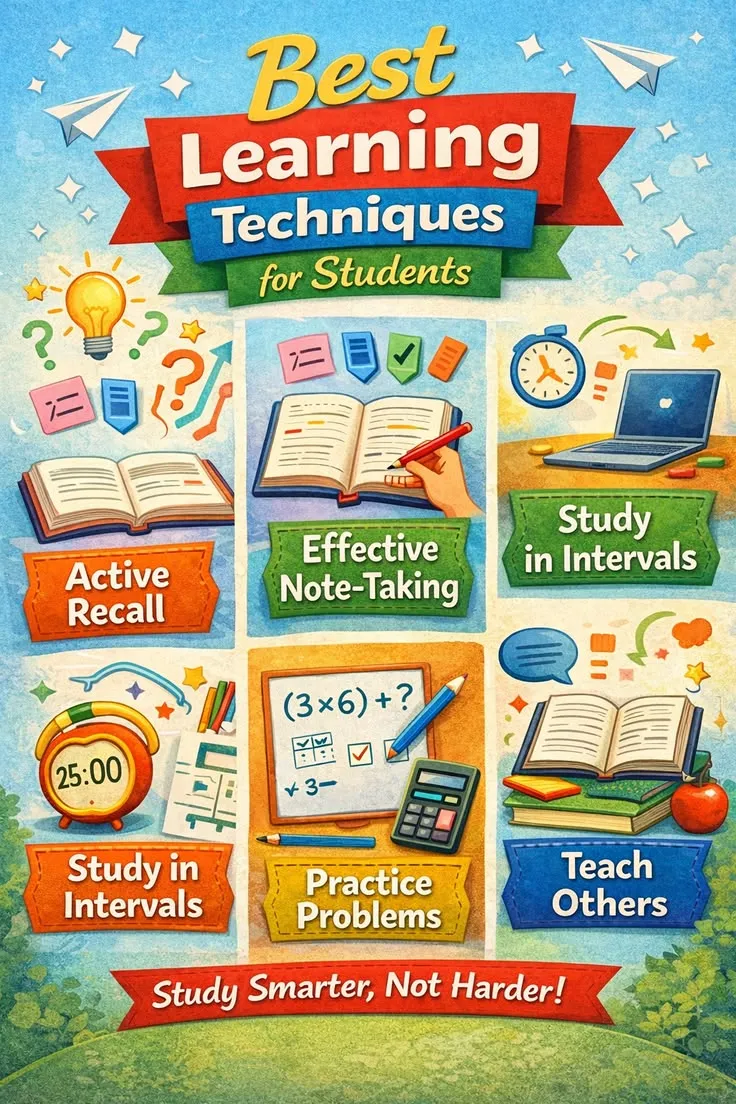
Effective learning methods help students improve understanding, memory, and academic performance. The right study techniques allow students to learn smarter rather than simply spending more time studying.
Methods such as active learning, regular revision, goal setting, practice, and effective time management create strong learning foundations.
Every student can improve their learning ability by developing consistent habits and choosing strategies that match their needs.
Successful learning is a combination of the right techniques, dedication, and continuous improvement. By applying effective study methods, students can achieve better results and develop skills that support lifelong learning.