Choosing the right cooking oil is an important part of maintaining a healthy diet and improving overall nutrition. Cooking oils play a major role in food preparation because they affect taste, texture, calories, and the nutritional value of meals. With so many options available, selecting the best oil can sometimes become confusing.
Different cooking oils have different properties, including their fat composition, smoke point, flavor, and suitability for various cooking methods. Understanding these differences helps individuals make better choices according to their health goals and cooking needs.
A balanced approach to choosing cooking oil focuses on quality, variety, portion control, and overall dietary habits. The right cooking oil, when used properly, can support a healthy lifestyle and contribute essential nutrients to the body.
Understanding the Role of Cooking Oil in Nutrition
Cooking oils are sources of dietary fats, which are important nutrients required by the body. Healthy fats support several body functions, including energy production, hormone regulation, and absorption of certain vitamins.
Vitamins such as A, D, E, and K are fat-soluble, meaning the body needs dietary fat to absorb them effectively. Including appropriate amounts of healthy fats in meals supports proper nutrition.
However, not all fats have the same effect on health. The type and amount of fat consumed can influence overall well-being. Choosing better-quality oils and using them in moderation is an important step toward balanced eating.
Types of Cooking Oils Available
There are many varieties of cooking oils, each with unique characteristics. Common cooking oils include olive oil, mustard oil, sunflower oil, coconut oil, groundnut oil, soybean oil, and rice bran oil.
Some oils are rich in monounsaturated fats, while others contain higher amounts of polyunsaturated fats. The nutritional profile depends on the source and processing method.
Each oil has different uses based on cooking style, flavor preference, and temperature requirements. Understanding these differences helps people select suitable oils for everyday meals.
Consider the Fat Composition of Oil
The type of fat present in cooking oil is an important factor when making a healthy choice.
Unsaturated fats, including monounsaturated and polyunsaturated fats, are generally considered beneficial when consumed in appropriate amounts. These fats are commonly found in oils made from plants, nuts, and seeds.
Saturated fats are also part of many foods, but consuming large amounts may not be suitable for everyone, especially when replacing healthier fat sources.
A balanced diet usually includes a variety of healthy fat sources rather than depending heavily on a single type of oil.
Understanding Smoke Point of Cooking Oil
The smoke point is the temperature at which an oil begins to produce visible smoke and may start breaking down.
Choosing an oil with an appropriate smoke point for cooking methods is important because different cooking techniques require different temperatures.
For high-temperature cooking methods such as frying, oils with higher smoke points may be more suitable. For low-temperature cooking, dressings, or light cooking, oils with different characteristics can be used.
Selecting oil based on cooking method helps maintain quality and flavor.
Choosing Oil for Different Cooking Methods
Different cooking techniques require different types of oils.
For deep frying or high-heat cooking, stable oils that can handle higher temperatures are often preferred. For sautéing, roasting, or regular home cooking, many commonly available oils can be suitable.
Some oils are better enjoyed without heating, such as those used in salad dressings or finishing dishes.
Understanding how an oil reacts to heat helps preserve its nutritional qualities and improves cooking results.
Importance of Oil Variety in Diet
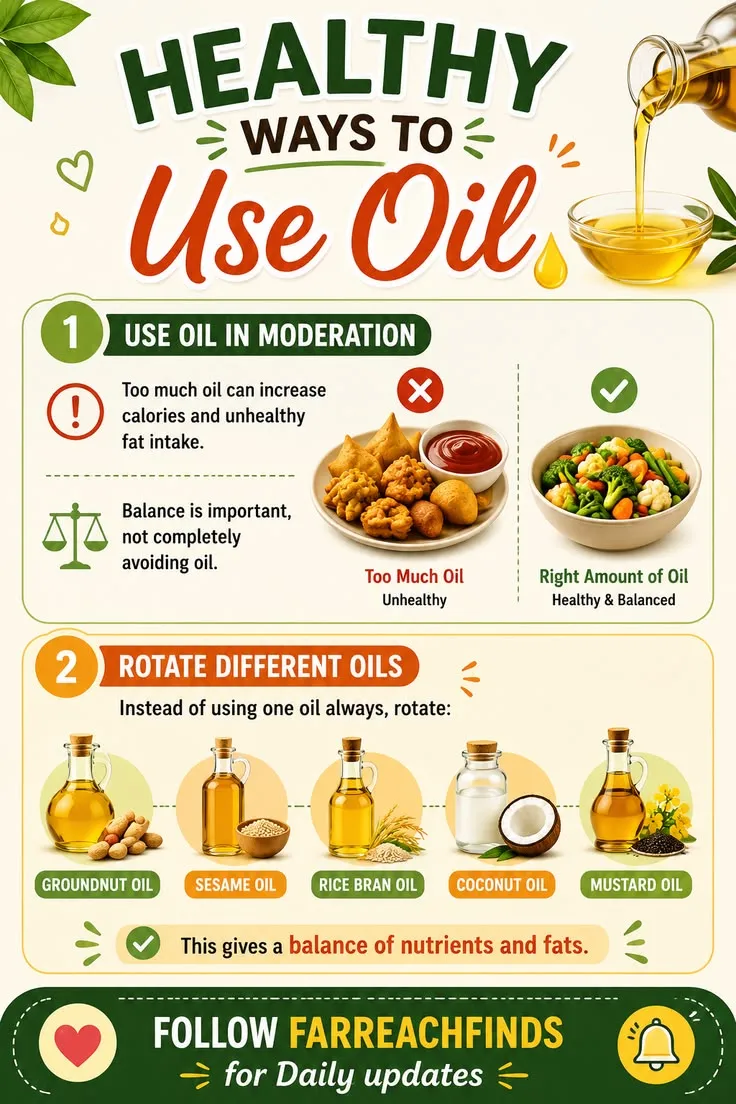
Using a variety of cooking oils can help provide different types of nutrients and fatty acids.
Relying on only one oil may limit the range of nutrients available from different sources. Rotating oils based on cooking requirements can create a more balanced approach.
For example, one oil may work well for everyday cooking, while another may be suitable for specific dishes or low-temperature uses.
A diverse diet with different healthy fat sources supports better nutritional balance.
Avoiding Overuse of Cooking Oil
Even healthier oils contain calories, so portion control is important.
Using excessive amounts of oil can increase calorie intake and may affect weight management goals.
Healthy cooking involves using enough oil to prepare food properly without adding unnecessary amounts.
Methods such as measuring oil, using cooking techniques that require less oil, and choosing healthier preparation methods can help maintain balance.
Moderation is one of the most important principles when using cooking oils.
Importance of Choosing Quality Oils
The quality of cooking oil affects its nutritional value and safety.
Fresh, properly stored oils generally maintain better quality. Exposure to heat, light, and air can affect oil quality over time.
Checking packaging information, storage instructions, and freshness indicators can help consumers make better choices.
High-quality oils should be stored properly to protect their flavor and nutritional properties.
Understanding Processed and Refined Oils
Cooking oils may be processed in different ways depending on their production methods.
Refined oils undergo processing to improve stability, appearance, and shelf life. Some oils are less processed and may retain more natural characteristics.
The choice between refined and less processed oils depends on personal preferences, cooking needs, and dietary goals.
Understanding how oils are produced helps consumers make informed decisions.
Cooking Oil and Heart Health
The relationship between cooking oil and heart health depends on the type of oil, overall diet, and lifestyle habits.
Replacing less healthy fat sources with oils containing beneficial unsaturated fats can support a balanced approach to nutrition.
However, using any oil excessively can affect overall calorie intake.
Heart health is influenced by many factors, including physical activity, food choices, and overall lifestyle patterns.
Choosing Cooking Oil for Indian Cooking Styles
Indian cooking includes various methods such as frying, roasting, sautéing, and slow cooking. Different regional cuisines also use different traditional oils based on availability and taste preferences.
Mustard oil, groundnut oil, coconut oil, sunflower oil, and rice bran oil are commonly used in different parts of India.
The best choice depends on cooking style, personal health requirements, and flavor preferences.
Traditional cooking practices combined with modern nutritional understanding can help create healthier meals.
Reading Labels Before Buying Cooking Oil
Checking product labels is an important step when purchasing cooking oil.
Labels provide information about ingredients, nutritional content, storage instructions, and processing details.
Consumers should understand what they are buying rather than selecting oils only based on advertisements or packaging.
Making informed choices helps ensure that the selected oil matches personal dietary needs.
Common Mistakes When Choosing Cooking Oil
Many people choose oils only based on price, popularity, or marketing claims.
Another common mistake is using too much oil or using the same oil for every cooking method.
Ignoring storage conditions and nutritional information can also affect oil quality.
Learning basic facts about cooking oils helps consumers avoid these mistakes and make healthier decisions.
Frequently Asked Questions (FAQs)
Which cooking oil is healthiest?
The healthiest cooking oil depends on individual needs, cooking methods, and overall diet. Oils with healthier fat profiles are generally preferred when used in moderation.
Can one cooking oil be used for all types of cooking?
Some oils are versatile, but different cooking methods may require oils with different properties.
How much cooking oil should be used daily?
The ideal amount depends on overall calorie needs, lifestyle, and dietary patterns. Moderation is important for maintaining a balanced diet.
Conclusion
Choosing the right cooking oil is an important step toward better health and nutrition. The best choice depends on understanding fat composition, cooking methods, oil quality, and personal dietary requirements.
Healthy eating is not about completely avoiding oils but about selecting better options and using them wisely. Combining quality cooking oils with a balanced diet, proper portion control, and healthy cooking practices can support long-term wellness.
By making informed decisions about cooking oils, individuals can improve their meals while creating a stronger foundation for a healthier lifestyle.