The journey of food from farms to consumers involves a complex system known as the food supply chain. Every meal we eat depends on a series of connected processes that include farming, harvesting, processing, transportation, storage, distribution, and retail.
A strong food supply chain ensures that fresh and safe food reaches people efficiently. It connects farmers, manufacturers, suppliers, transportation companies, retailers, and consumers through a coordinated network.
Understanding how food supply chains work helps people appreciate the effort behind everyday food products and highlights the importance of efficient systems in maintaining food quality, availability, and safety.
Understanding the Food Supply Chain
A food supply chain is the complete journey that food products follow from their original source to the final consumer. It includes all activities involved in producing, handling, moving, and selling food.
The process begins with agricultural production, where farmers grow crops or raise animals. After production, food products move through different stages before reaching supermarkets, restaurants, and homes.
Each stage plays an important role in maintaining food quality and ensuring that products are available when needed.
The food supply chain is influenced by factors such as weather conditions, transportation systems, technology, market demand, and consumer preferences.
The Role of Farmers in Food Supply Chains
Farmers are the foundation of the food supply chain because they produce the raw materials needed for food production.
Crop farmers grow products such as grains, fruits, vegetables, and other agricultural goods. Livestock farmers produce items such as milk, eggs, and meat.
Farmers use various techniques, including modern farming methods, irrigation systems, and agricultural technology, to improve production and maintain quality.
After harvesting or production, farmers prepare food products for the next stage of the supply chain, where they are collected, processed, or transported.
Harvesting and Collection Process
Once crops are ready for harvest, they are collected and prepared for movement through the supply chain.
The timing of harvesting is important because it affects food quality, freshness, and shelf life. Many products require careful handling to prevent damage.
After collection, agricultural products are transported to storage facilities, processing centers, or markets.
Proper handling during this stage helps reduce food waste and ensures that products maintain their quality.
Efficient collection systems allow food producers to connect with larger markets and reach more consumers.
Food Processing and Manufacturing
Food processing is an important stage where raw agricultural products are transformed into consumer-ready products.
Processing may involve cleaning, sorting, packaging, preserving, or combining ingredients to create finished food items.
For example, grains may be processed into flour, milk may be converted into dairy products, and fruits may be prepared for juices or packaged foods.
Food processing helps improve product safety, increase shelf life, and make transportation easier.
Modern food manufacturing facilities use technology and quality control systems to maintain consistent standards.
The Importance of Food Storage
Storage plays a critical role in maintaining food availability and reducing waste.
Many food products require specific storage conditions, such as controlled temperature and humidity levels.
Warehouses, cold storage facilities, and distribution centers help protect food products before they reach retailers.
Proper storage prevents spoilage and allows food suppliers to manage demand effectively.
Without efficient storage systems, maintaining a consistent food supply would become more difficult.
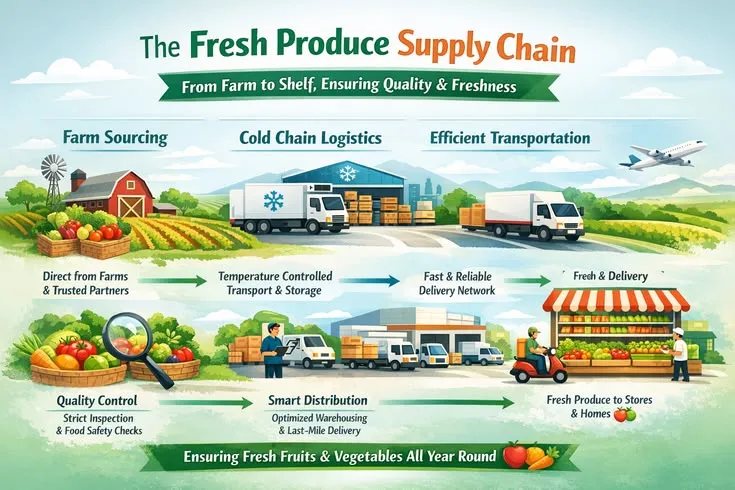
Transportation in the Food Supply Chain
Transportation connects different stages of the food supply chain.
Food products often travel through multiple transportation methods, including trucks, ships, trains, and other delivery systems.
Fresh products require careful transportation because they may have limited shelf life.
Cold chain transportation is especially important for products such as dairy items, seafood, frozen foods, and certain fruits and vegetables.
A reliable transportation network ensures that food reaches markets quickly while maintaining safety and quality.
Distribution Centers and Wholesale Markets
Distribution centers act as important connection points between producers and retailers.
These facilities receive food products from manufacturers and suppliers, organize them, and send them to different locations.
Wholesale markets also help connect producers with retailers and businesses.
Efficient distribution systems allow food companies to manage large quantities of products and deliver them according to market demand.
Technology helps distribution centers track inventory, manage orders, and improve efficiency.
Role of Retailers in Bringing Food to Consumers
Retailers are the final stage before food reaches consumers.
Supermarkets, grocery stores, restaurants, and online food platforms purchase products from suppliers and make them available to customers.
Retailers are responsible for maintaining product quality, proper storage, and customer service.
They also help understand consumer preferences and provide information that influences future food production.
The retail stage connects the entire supply chain with everyday consumers.
Technology in Modern Food Supply Chains
Technology has transformed the way food supply chains operate.
Digital tracking systems, inventory management software, and data analysis tools help companies monitor food movement and improve efficiency.
Advanced technologies allow businesses to track products from production to delivery.
Automation and smart systems help reduce errors, manage inventory, and improve decision-making.
Technology also supports food safety by helping identify problems quickly and improving transparency.
Food Safety and Quality Control
Food safety is one of the most important aspects of the food supply chain.
Every stage, from farming to retail, requires proper safety practices to prevent contamination and maintain quality.
Farmers, processors, transporters, and retailers follow safety standards to protect consumers.
Quality control measures include inspections, testing, proper handling, and monitoring storage conditions.
A safe food supply chain builds consumer trust and ensures that food products meet required standards.
Challenges in Food Supply Chains
Food supply chains face several challenges that can affect availability and pricing.
Weather changes, natural disasters, transportation issues, rising costs, and global events can disrupt food movement.
Food waste is another major challenge because products can be lost during production, storage, transportation, or retail.
Companies continuously work to improve supply chain efficiency, reduce waste, and create more reliable systems.
Building flexible and sustainable supply chains helps manage unexpected problems.
Sustainable Food Supply Chains
Sustainability has become an important focus in modern food supply systems.
Sustainable supply chains aim to reduce environmental impact, conserve resources, and support responsible production methods.
Practices such as reducing food waste, improving transportation efficiency, and using environmentally friendly packaging contribute to sustainability.
Supporting local food systems can also reduce transportation distances and strengthen local economies.
Sustainable approaches help create a food system that benefits both people and the environment.
The Future of Food Supply Chains
The future of food supply chains will continue to focus on technology, efficiency, and sustainability.
Innovations such as artificial intelligence, improved tracking systems, and advanced farming techniques are expected to improve food production and distribution.
Consumers are also becoming more interested in knowing where their food comes from and how it is produced.
Greater transparency and smarter systems will help create safer and more reliable food networks.
The goal of future food supply chains is to provide quality food while reducing waste and improving efficiency.
Frequently Asked Questions (FAQs)
What is a food supply chain?
A food supply chain is the complete process through which food moves from farms to consumers, including production, processing, storage, transportation, and selling.
Why is food storage important?
Food storage helps maintain quality, prevent spoilage, and ensure that products remain available for consumers.
How does technology improve food supply chains?
Technology improves tracking, inventory management, safety monitoring, and overall efficiency throughout the food supply chain.
Conclusion
The food supply chain is a complex network that connects farmers, manufacturers, transportation providers, retailers, and consumers. Every step, from farming to final delivery, plays an important role in ensuring that food reaches people safely and efficiently.
Modern food supply chains rely on technology, quality control, and sustainable practices to overcome challenges and meet growing consumer needs.
Understanding the journey of food from farm to table helps people recognize the importance of efficient systems and responsible practices that support global food availability.