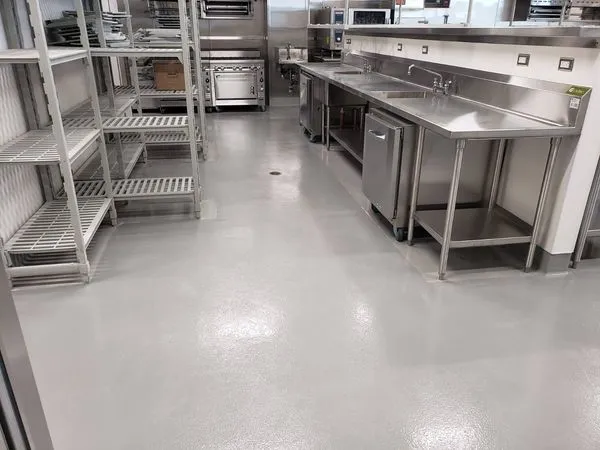
Commercial bakeries may look cleaner and drier than many food-processing environments, but their floors face a distinctive combination of stress. Flour dust, sugar, oils, dough residues, hot equipment, rolling racks, mixers, and frequent cleaning all affect the same surface. Some zones remain comparatively dry, while others experience repeated washdowns or product spills. That variation makes a one-size-fits-all flooring approach less practical. Bakery operators should evaluate how each production area works before choosing a resinous system.
Flour Dust Changes Housekeeping Needs
Fine flour can spread far beyond the mixing area. Foot traffic, carts, and air movement may carry it into corridors, packaging zones, and storage spaces. When it settles in cracks, damaged joints, or rough patches, routine cleaning can become more time-consuming.
A smooth, continuous floor can make dry debris easier to remove than deteriorated concrete with numerous irregularities. However, housekeeping still matters. Regular removal helps prevent flour and other particles from combining with moisture or oils to form harder-to-clean residue.
Sugar and Oils Create Sticky Residues
Bakery production can introduce syrups, fillings, sugar solutions, butter, shortening, and edible oils to the floor. These materials may become slippery or sticky, particularly around mixing, depositing, glazing, and finishing stations.
Facilities researching Online Commercial Kitchen Epoxy Flooring Nj should consider where these ingredients are handled most often. The flooring specification should reflect spill frequency, cleaning procedures, and the products used to remove residue rather than assuming every bakery area faces the same exposure.
Ovens Create Localized Heat Zones
The floor around ovens, proofers, kettles, and other heated equipment can experience different conditions from cooler preparation or packaging areas. Hot equipment, warm wash water, and nearby refrigeration may also create repeated temperature changes within the same facility.
These differences should be discussed before material selection. Resin systems designed for demanding food environments may be more appropriate in heat- and washdown-intensive zones than a standard coating selected mainly for appearance.
Rolling Racks Add Mechanical Wear
Bakeries often move trays, racks, ingredient carts, and mobile equipment throughout production. Narrow wheels can concentrate load on joints, thresholds, and turning points, especially when racks are fully loaded.
Managers should identify the busiest routes and inspect them for chipped edges, cracks, or old patches before resurfacing. Repeated caster movement can make a small defect progressively worse, so traffic patterns deserve as much attention as spills and sanitation.
Texture Should Vary by Exposure
A bakery may contain wet production zones, dry ingredient storage, packaging areas, coolers, and public-facing spaces. Using the roughest possible texture everywhere can increase cleaning effort unnecessarily.
Additional traction may be useful near washing or ingredient-handling areas, while smoother finishes may be easier to maintain in dry packaging zones. The goal is to balance footing and cleanability according to how each section is actually used.
Preparation Matters Beneath the Finish
Old bakery floors can contain flour residue, oils, previous coatings, adhesive, cracks, and patches from earlier equipment layouts. These conditions should be addressed before new resin layers are installed.
When considering Food And Beverage Flooring Services In Nj, facility managers should ask how the existing substrate will be evaluated and mechanically prepared. A new finish can only perform consistently when weak material, contamination, and damaged concrete are dealt with first.
Equipment Layout Should Guide Renovation
Large mixers, ovens, proofers, depositors, and fixed production lines can restrict access to the slab. When equipment is replaced or temporarily moved, the exposed concrete may reveal hidden staining, anchor holes, or older repairs.
Renovation planning should therefore coordinate equipment movement with flooring work. Using temporary access while machinery is out of place can make it easier to inspect and prepare the whole production zone rather than coating only the areas that remain visible.
Cleaning Cycles Reveal Problem Areas
A thorough sanitation cycle often shows where the floor performs poorly. Water may collect in low spots, sticky residues may remain in deep texture, and damaged transitions can hold debris after surrounding sections are clean.
Managers can use these cleaning observations as practical inspection data. Areas that repeatedly require extra labour may deserve closer assessment before the next resurfacing project.
Conclusion
Commercial bakery flooring must cope with a combination of dry flour, sticky ingredients, oils, heat, rolling racks, cleaning chemicals, and changing moisture conditions. The most demanding zones are not always the largest, which makes blanket specifications less useful.
A stronger strategy begins by dividing the bakery according to actual production exposure. Traffic, heat, spills, texture, cleaning, equipment access, and concrete condition can then guide the flooring system in each area. By planning around real bakery workflows, operators can create surfaces that are easier to maintain and better matched to the demands of daily production.